
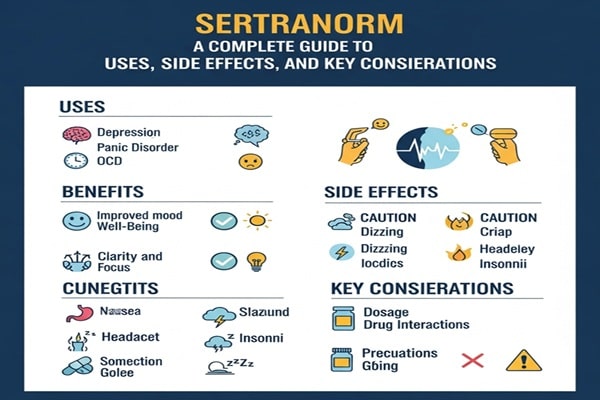
Sertranorm is one of those medications people often hear about but don’t fully understand until they or someone close to them needs it. If you’ve been prescribed Sertranorm—or you’re simply trying to learn more—you’re not alone. Many people want clear, honest information without medical jargon or scare tactics.
Think of this guide as a calm, friendly walk-through. We’ll break down what Sertranorm really is, how it helps, what to expect, and how to use it wisely, all in plain language.
What Exactly Is Sertranorm?
Sertranorm is a prescription medication that contains sertraline, a well-known antidepressant. Sertraline belongs to a group of medicines called SSRIs (selective serotonin reuptake inhibitors).
In simple terms:
-
It’s designed to help improve mood
-
It helps reduce anxiety and obsessive thoughts
-
It supports emotional balance over time
Doctors commonly prescribe Sertranorm for people dealing with depression, anxiety-related conditions, and stress disorders that interfere with daily life.
How Sertranorm Works Inside the Brain
Your brain relies on chemical messengers to regulate emotions. One of the most important of these is serotonin, which plays a role in:
-
Mood
-
Sleep
-
Appetite
-
Emotional stability
When serotonin doesn’t circulate properly, people may feel low, anxious, or mentally overwhelmed.
Sertranorm helps by:
-
Preventing serotonin from being reabsorbed too quickly
-
Allowing more serotonin to stay active between brain cells
-
Supporting steadier emotional responses over time
This isn’t an instant fix, but rather a gradual adjustment that helps the brain regain balance.
Conditions Sertranorm Is Commonly Prescribed For
Sertranorm is trusted by healthcare providers because it works across multiple mental health conditions.
1. Depression
It helps ease persistent sadness, lack of motivation, fatigue, and loss of interest in things that once mattered.
2. Anxiety Disorders
People with generalized anxiety often experience constant worry and tension. Sertranorm helps reduce that mental “noise.”
3. Obsessive–Compulsive Disorder (OCD)
It can lessen intrusive thoughts and reduce the urge to repeat behaviors.
4. Panic Disorder
Those sudden panic attacks can become less frequent and less intense with consistent use.
5. Social Anxiety
Sertranorm may help reduce fear around social interactions, meetings, or public situations.
6. Post-Traumatic Stress Disorder (PTSD)
Some patients report fewer flashbacks, nightmares, and emotional spikes linked to trauma.
Available Dosages and How It’s Taken
Sertranorm usually comes in tablet form and is available in different strengths, including:
-
25 mg
-
50 mg
-
100 mg
Typical Usage Guidelines
-
Taken once daily
-
Can be taken with or without food
-
Best taken at the same time each day
Doctors usually start with a lower dose and increase gradually, depending on how the body responds.
When Will You Start Noticing Changes?
This is one of the most common questions.
Here’s a realistic timeline:
-
First 1–2 weeks: Mild changes, possible side effects
-
Weeks 3–4: Anxiety and mood symptoms may begin easing
-
Weeks 6–8: More noticeable emotional stability
It’s important not to stop early just because results aren’t immediate.
Benefits People Often Experience
When Sertranorm works well, people often describe changes like:
-
More emotional balance
-
Reduced overthinking
-
Better ability to handle stress
-
Improved sleep patterns
-
Increased motivation
-
Greater comfort in social settings
Many say it feels less like “being someone else” and more like returning to themselves.
Possible Side Effects (What’s Normal and What’s Not)
Every medication has potential side effects, and Sertranorm is no exception. Most are mild and temporary.
Common Side Effects
-
Nausea or upset stomach
-
Headache
-
Drowsiness or trouble sleeping
-
Dry mouth
-
Sweating
-
Changes in appetite
-
Reduced sexual desire
These often fade as the body adjusts.
Less Common but Serious Effects
-
Intense mood changes
-
Thoughts of self-harm (especially early in treatment)
-
Severe restlessness
-
Allergic reactions
-
Rapid heartbeat or confusion
If any serious symptoms appear, medical advice should be sought immediately.
Important Things to Discuss With Your Doctor
Before starting Sertranorm, open communication matters.
Let your provider know if you have:
-
Liver or heart conditions
-
A history of seizures
-
Bleeding disorders
-
Other medications or supplements
Some combinations can increase risks, especially when mixed with other antidepressants or herbal products.
Can You Drink Alcohol While Taking Sertranorm?
Alcohol can increase certain side effects like:
-
Dizziness
-
Fatigue
-
Poor concentration
Many doctors recommend limiting or avoiding alcohol, especially during the early stages of treatment.
What Happens If You Miss a Dose?
If you forget a dose:
-
Take it as soon as you remember
-
Skip it if it’s close to the next dose
-
Never double up
Consistency matters, but occasional mistakes happen. Just return to your routine.
Stopping Sertranorm: Why Gradual Matters
Stopping suddenly can cause uncomfortable symptoms such as:
-
Dizziness
-
Irritability
-
Sleep disruption
-
Flu-like feelings
Doctors usually recommend tapering slowly to allow the brain to adjust smoothly.
How Sertranorm Compares to Other SSRIs
Sertranorm is often compared with medications like fluoxetine or citalopram. Many doctors favor sertraline-based options because:
-
They work across multiple conditions
-
Side effects are generally manageable
-
Weight and sedation risks are lower for many users
That said, the “best” option varies from person to person.
Also Read : Branwen Jeffreys: A Trailblazer in British Journalism
Supporting Your Treatment Beyond Medication
Sertranorm works best when combined with healthy habits.
Helpful additions include:
-
Talk therapy (especially CBT)
-
Regular physical activity
-
Balanced meals
-
Mindfulness or breathing exercises
-
Strong social support
Medication opens the door, but lifestyle choices help keep it open.
Long-Term Use: What to Expect
Some people take Sertranorm for several months. Others may need longer-term support.
With proper guidance:
-
Long-term use can be safe
-
Regular check-ins help fine-tune dosage
-
Many people regain consistent emotional stability
The goal is progress, not perfection.
Final Thoughts: Is Sertranorm Worth Considering?
Sertranorm isn’t a magic solution, but for many, it becomes a reliable tool. It helps quiet overwhelming thoughts, steadies emotions, and allows people to re-engage with daily life more confidently.
Understanding how it works, what to expect, and how to use it responsibly can make the experience far less intimidating. Mental health journeys look different for everyone, and Sertranorm is simply one option among many—an option that has helped countless people feel more grounded and capable again.

